Mushrooms in Lawn: What Causes Them and What You Can Do
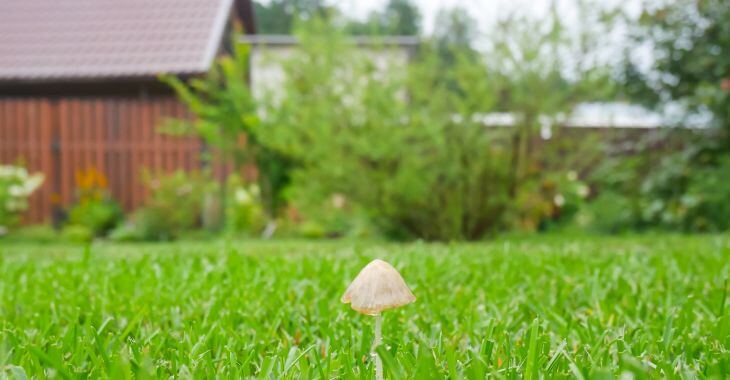
Mushrooms in lawn usually pop up after rain or heavy watering, especially if your soil stays damp. They grow from fungi already living below the surface and feed on decaying organic material. Seeing mushrooms doesn’t mean your grass is diseased. Most of the time, they’re just the fruiting bodies of fungi breaking down buried roots, old wood, thatch, or other organic matter.
Common Lawn Mushrooms Causes
Several things can encourage mushrooms to show up. Moisture is a big trigger, but it’s usually not the only reason fungi are in your lawn.
Common lawn mushrooms causes include wet soil, frequent irrigation, poor drainage, buried tree roots, old stumps, decaying wood, and thick layers of organic debris.
Fungi can live underground for a long time before you ever see mushrooms. Rain, humidity, and mild temperatures can suddenly bring them to the surface, even if the fungus has been there all along.
Are Mushrooms in Lawn Bad for Grass?
Most mushrooms in lawn aren’t attacking your grass. Many fungi actually help break down dead organic material and return nutrients to the soil as part of the normal decomposition process.
You shouldn’t ignore every mushroom, though. If mushrooms keep coming back, it could mean your soil is too wet, there’s buried wood, or another issue, especially if your lawn looks thin, stressed, or waterlogged.
If mushrooms show up but your turf looks healthy, it’s probably just an appearance issue. Their presence can even mean fungi are actively breaking down organic material under the surface.
Why Mushrooms Appear After Rain
Wet weather gives fungi the moisture they need to produce mushrooms above ground. Your lawn can look normal one day and suddenly have clusters of mushrooms after a few rainy days.
The main fungal network, called mycelium, stays in the soil or organic material below your grass. Mushrooms are just temporary structures that release spores and usually disappear quickly when things dry out.
Mowing off mushrooms won’t get rid of the fungus. What you see above ground is only a small part of what’s growing underground.
Removing the visible mushrooms can clean up the lawn, but it won’t remove the fungus growing below the surface.

Grass Turning Yellow: Common Causes and What to Do
If you see grass turning yellow, your lawn is probably stressed. Too much or too little water, low nutrients, compacted soil, mowing problems, disease, pests, o...Read More about Grass Turning Yellow: Common Causes and What to Do
How to Get Rid of Lawn Mushrooms
Figuring out how to get rid of lawn mushrooms starts with deciding if you just want to remove what you see or tackle the conditions that let them grow.
You can pick, rake, or mow visible mushrooms if they bother you. Remove them promptly if children or pets might try to eat them, because you should never assume a lawn mushroom is safe.
If mushrooms keep coming back, check your moisture and drainage. Don’t water more than your lawn needs, and see if low spots, compacted soil, or downspouts are keeping one area wet.
Letting the surface dry out between waterings and improving airflow can also help reduce how often mushrooms show up.
If mushrooms grow where a tree or stump was removed, buried roots or wood may be feeding the fungus. Removing accessible decaying material can sometimes reduce repeated growth.
Thick thatch or buried landscape debris can provide another food source.
Fungicide is usually not a practical answer for ordinary lawn mushrooms because the fungi often live deep in the soil or buried organic matter.
What About Mushrooms Growing in Rings?
If you see mushrooms in circles or arcs, you might have what’s often called a fairy ring. These fungi spread outward through the soil as they feed on organic material.
Some fairy rings just produce mushrooms or patches of darker green grass. Others can create dry or stressed areas where water has trouble moving through the soil.
A ring doesn’t always mean your lawn is dying. If you keep seeing rings along with thinning or brown grass, though, it’s always a good idea to take a closer look at soil moisture and turf health.
When Mushrooms in Lawn Need More Attention
A few mushrooms after rain usually disappear without causing problems. If you keep seeing mushrooms in the same soggy or slow-draining area, or where turf looks unhealthy, it’s a good clue that something needs attention.
Watch for mushrooms around old tree locations, low areas, heavily shaded spots, or places where mulch, roots, or wood may be buried beneath the lawn.
Safety matters too. If children or pets use the yard, remove visible mushrooms before they can be eaten. Don’t rely on appearance alone to decide whether a mushroom is harmless.
Getting a Mushroom Problem Checked
If mushrooms in lawn keep coming back along with wet soil, poor drainage, or damaged turf, it may be worth having the area checked instead of just mowing off the mushrooms again and again.
Reach out to local landscapers who can look at drainage, soil conditions, buried organic material, and turf health. The right solution might involve moisture control, cleanup, soil improvement, or letting the organic material finish breaking down.
Taking a closer look can also help you tell the difference between a harmless mushroom flush and a lawn condition that needs attention.