Lawn Leveling: How to Fix Low Spots and Build a Smoother Yard

Lawn leveling helps smooth uneven areas, fill shallow dips, and make your yard easier to mow and enjoy. If you see puddles after rain or feel bumps underfoot, the soil may need careful correction instead of another quick patch.
A level lawn also helps water move more evenly across the surface. When low areas collect moisture, grass can thin out, soil can compact, and the same dips may keep coming back after heavy rain.
Why Lawn Leveling Matters for Your Yard
Uneven lawns can develop for several reasons. Soil settles over time, tree roots shift the ground, foot traffic compacts the surface, and drainage problems wash soil out of place. Even a small dip can become more noticeable after repeated rainfall.
Lawn leveling is best for shallow low spots, bumpy turf, and mild surface unevenness. Deep holes, erosion, or large drainage failures may need more than a simple leveling mix.
What Causes Low Spot Recurrence After Rain?
Low spot recurrence after rain often means the original cause was never fully corrected. Filling a dip once may improve the surface for a short time, but water can keep pushing soil away if drainage patterns stay the same.
Rain also reveals hidden grading problems. If water flows toward one part of the yard, that area may stay soft longer than the surrounding soil. Soft soil compresses faster, especially when people walk across it too soon.
Common causes of low spot recurrence after rain include poor grading, compacted soil, thin grass cover, and runoff from patios, downspouts, or nearby hard surfaces.
The best lawn leveling plan fixes the low spot and the reason that the low spot keeps forming.
Choosing the Right Sand vs Topsoil Mix Ratio
A common question in lawn leveling is how to choose the right sand vs topsoil mix ratio. Sand can improve firmness and drainage, while topsoil adds organic matter and helps grass roots stay supported.
The best mix depends on your existing soil. Heavy clay soil may need a different approach than sandy soil because too much sand mixed into clay can create a hard, dense texture. That can make drainage worse instead of better.
Many homeowners use a leveling blend that includes screened topsoil, sand, and compost. The goal is a fine, spreadable mix that settles smoothly into low areas without smothering the grass.
For minor lawn leveling, a thin layer is safer than one heavy application. Add enough mix to correct the dip, but keep grass blades visible whenever possible so the lawn can keep growing.
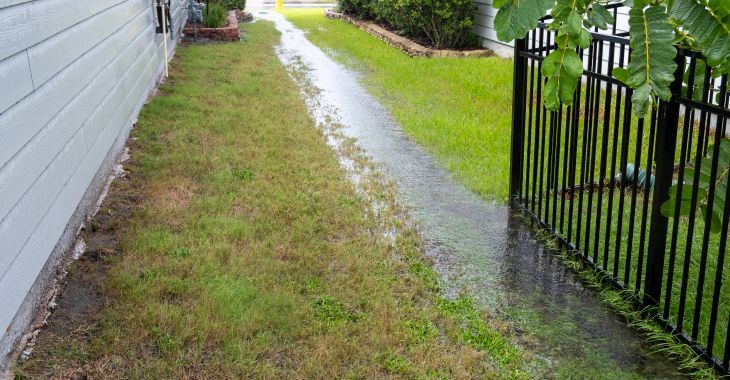
Why Your Yard Stays Wet: Solving Soggy Yard Spots for Good
Soggy yard spots are more than just an annoyance. They can limit how you use your outdoor space, damage landscaping, and even affect your home’s foundation ov...Read More
How to Apply Lawn Leveling Material Correctly
Before you add material, mow the lawn lower than usual without scalping it. Remove sticks, leaves, rocks, and thick thatch so the leveling mix can reach the soil surface instead of sitting on debris.
Spread the material lightly over low spots, then use a rake, leveling tool, or drag mat to work it into the turf. The surface should look smoother, but it shouldn’t bury healthy grass under a thick layer.
For larger uneven areas, it may take more than one round. A slow approach helps the grass recover between applications and reduces the risk of creating new mounds while trying to fix old dips.
Water the area gently after spreading the mix. This helps the material settle and shows whether you need another light pass after the soil firms up.
When Lawn Leveling Needs Drainage Help
Lawn leveling can improve the surface, but it can’t solve every water problem by itself. If the same area floods after each storm, the yard may need drainage corrections before leveling will last.
Look at where the water comes from. Downspouts, patios, sidewalks, and compacted paths can all send runoff into one low area. Until that water moves differently, the soil may keep settling.
A local landscaping company can check slope, soil type, turf condition, and water movement. That helps you decide whether lawn leveling, aeration, regrading, drainage work, or new grass would be the better next step.
What to Compare Before Hiring a Landscaper
If you’re hiring help for lawn leveling, compare more than price. Ask how the company evaluates low spots, what material blend they use, and whether they adjust the sand vs topsoil mix ratio based on your soil.
You may also want to ask:
- Will you check drainage before filling low spots?
- How deep can the leveling material be applied?
- Will the lawn need aeration first?
- How do you reduce low spot recurrence after rain?
These questions can help you avoid a quick cosmetic fix when your yard needs a more practical repair plan.
Building a Lawn Leveling Plan That Lasts
A good lawn leveling plan starts with the reason the yard became uneven. Filling a dip may help, but lasting results come from improving the soil surface, managing runoff, and choosing the right leveling material.
Check the yard after rainfall before you schedule work. Notice where water collects, how long it stays, and whether the grass looks thin or compacted in those areas.
To compare local landscapers, review service listings, ask about lawn leveling experience, and look for providers who explain how they handle soil mix, drainage, and low spot recurrence after rain.