Dog-Damaged Lawn: How to Repair Urine Spots and Worn Grass
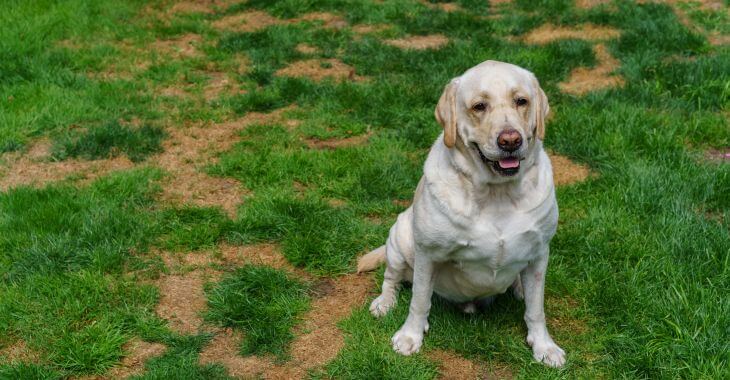
A dog-damaged lawn can develop brown patches, unusually dark green spots, or bare tracks where pets run. Urine is one cause, but digging and traffic also damage turf.
Before adding seed or fertilizer, check the spots and where your dog goes. A repair that works for a urine burn won’t necessarily fix a worn path along the fence.
Why Dog Urine Lawn Damage Leaves Brown Spots
Dog urine lawn damage happens when urine deposits concentrated compounds, including nitrogen and salts, in a small patch of turf. Mild exposure may make grass grow greener and faster; stronger exposure can injure or kill it.
A brown center surrounded by darker green grass is a common clue. The outer ring receives enough nitrogen to stimulate growth, while the center gets too much.
Heat and dry soil can make it worse. Dogs that squat in one place may leave more concentrated spots, regardless of whether they’re male or female.
Make Sure the Dog Is Causing the Damage
Not every yellow circle means your pet caused it. Fertilizer spills, lawn diseases, drought, and insects can also create discolored patches. Check whether new spots line up with places your dog regularly uses.
Urine injury often appears in small, distinct patches, while running and digging tend to leave worn strips or exposed soil. If patches spread where your dog rarely goes, check for other causes.
How to Repair Dog Urine Spots Early
The quickest way to limit a fresh urine spot is to water the area promptly. Water dilutes the urine before its concentrated compounds cause more injury, though injury can still occur.
If the blades have turned brown but the crowns and roots are still alive, normal watering and time may help it recover. Avoid keeping the spot constantly wet, especially if drainage is already poor.
To repair dog urine spots that keep recurring, address the dog’s bathroom habits alongside the damaged grass. Otherwise, new urine deposits can injure the same patch as it starts to recover.
Low Maintenance Grass: How to Choose a Lawn That Needs Less Work
Low maintenance grass helps you spend less time mowing, watering, and fertilizing, but the best choice depends on your yard. Grass that stands up to summer heat...Read More about Low Maintenance Grass: How to Choose a Lawn That Needs Less Work
Reseed or Patch Grass That Won’t Recover
Once grass has died, watering won’t bring those plants back. Dilute residue with water, clear dead turf, then reseed or patch during the right growing season for your grass type.
Choose seed or sod that matches the existing lawn. A quick-fix seed blend may grow fast but leave a patch with a different color or texture from the surrounding turf.
Some spreading grasses can slowly fill small gaps when they’re actively growing. Bunch-forming grasses, including tall fescue, often need seed or sod where individual plants have died.
Keep your dog out of newly repaired areas while roots establish. Even a good repair can fail if fresh seed gets disturbed or pets keep using the same spot.
A lasting lawn repair depends on whether the grass is still alive and whether the cause of damage has changed.
Treatments to Avoid on a Dog-Damaged Lawn
Skip the idea that lime, gypsum, baking soda, or dish soap will reliably neutralize urine damage. These remedies haven’t shown dependable benefits, and some can make turf injury worse.
Urine spots aren’t primarily a problem with acidic urine. Products meant to change your dog’s urine pH or diet can create health risks, so ask a veterinarian before considering any supplement.
Adding fertilizer directly to a burned patch is another poor shortcut. Concentrated nitrogen already contributes to the injury, and more fertilizer may increase stress instead of fixing it.
Prevent Repeat Dog Urine Lawn Damage
If possible, guide your dog to a designated bathroom area away from the main lawn. A mulched or gravel-covered section may be easier to maintain than repeatedly repairing grass in one favorite spot.
Rinse turf promptly after your dog urinates. Keep the lawn adequately watered during dry spells, but adjust irrigation to the grass and soil rather than soaking everything daily.
No grass type is completely immune to urine injury. When selecting turf for a pet-friendly yard, consider local climate, shade, and foot traffic as well as how quickly the grass can recover.
What About Running, Digging, and Worn Paths?
A dog-damaged lawn may also have bare routes near fences or gates. Repeated running wears away grass and can compact the soil, making it harder for replacement turf to establish.
Shift play elsewhere or add a durable path along the usual route. In frequently worn places, replacing a strip of turf with a suitable non-grass surface may reduce repeated repairs.
When a Dog-Damaged Lawn Needs a Closer Look
If the same patches keep dying despite changes to watering and pet habits, check for other causes before replanting again. A local landscaper can assess turf condition, soil compaction, and whether repairs suit your grass type.
A dog-damaged lawn may need patching, different traffic patterns, or a designated pet area. The solution depends on urine burns, worn turf, or both.